
Restoring Balance to an Overdrive Nervous System
Modern life keeps many of us locked in a state of continuous stress. While modalities like chiropractic care and Acupuncture target specific structural or energetic channels, CranioSacral Therapy works with the autonomic nervous system — the part of you that governs whether you are running in fight-or-flight or in recovery.
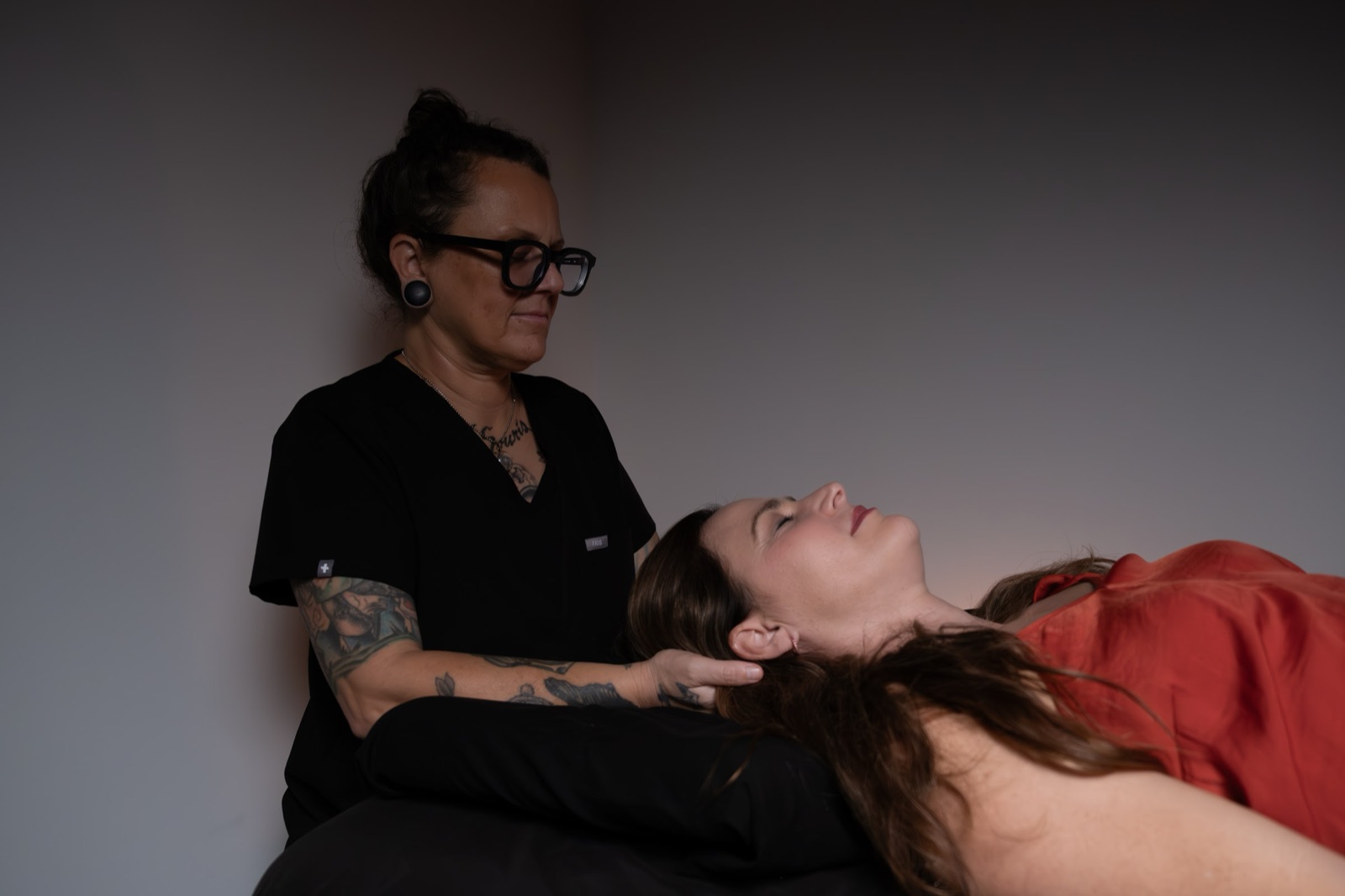
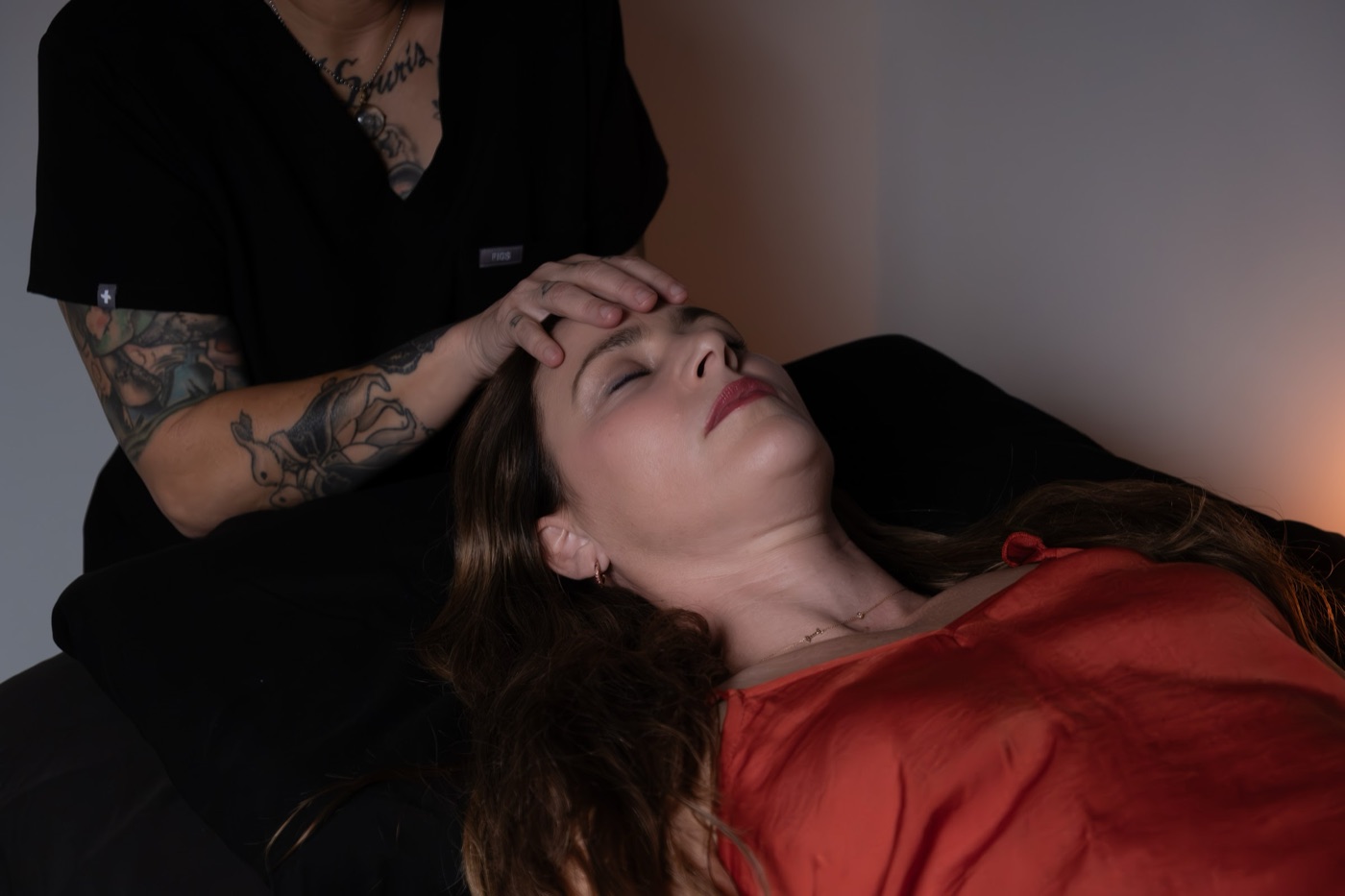
Fully clothed and resting comfortably, you’ll experience a precise, light-touch approach. Ash holds specific contact points along the cranium, spine and sacrum — following your body’s subtle cues rather than using force or manipulation. It requires nothing from you except to lie down and let your system settle.
No adjusting. No needles. No deep pressure. From the outside, almost nothing appears to happen — and most people describe it as the most relaxed they have been in months.
How Light Is “Light Touch”?
CranioSacral Therapy uses roughly five grams of pressure — about the weight of a nickel. That is the standard taught in the Upledger approach Ash trained in, and it is not a figure of speech.
Nothing is forced, stretched or manipulated. The method is built around what practitioners call the craniosacral rhythm, and the working idea is that tissue releases more readily when it is not being pushed. Whether that rhythm is a measurable thing remains debated — see the research note further down — but the light-touch approach itself is exactly what it sounds like.
If you have ever braced for a treatment, this is the opposite experience.
Why This Sits in a Chiropractic Office
A craniosacral therapist inside a chiropractic practice can look like an add-on. It is not.
Dr. Olenek’s primary method, Applied Kinesiology, is built on reading how the nervous system is governing the body in front of him — the muscle is the readout, not the point. Ash’s own background runs through functional medicine and functional neurology. And CranioSacral Therapy works with the autonomic nervous system: the part of you that decides whether you are running in fight-or-flight or in recovery.
Different hands, different pressure, the same question — what is this person’s nervous system actually doing, and what changes it?
That is why the two sit together, and why a number of patients end up doing both.
What to Expect, Step by Step
Your first visit is 90 minutes, and every patient starts here. It splits into two halves that do different jobs:
The first 30 minutes: a proper conversation. Not a clipboard at the front desk — sitting down with Ash while she takes a detailed history. What your stress load actually looks like. How you are sleeping. Where you hold things. What you have already tried and what it did or did not do. Most people are surprised by how much ground this covers, and a fair few say it is the first time anyone has asked.
The next 60 minutes: hands on the table. A full session — the same 60 minutes every follow-up gets.
That is the part worth understanding. A lot of practices advertise a 90-minute first visit and then spend the first half hour of it on paperwork, so you leave having had 60 minutes of appointment and 30 minutes of treatment. Here the intake is added to your session, not carved out of it. You get the full hour of hands-on work on day one, and Ash gets to start from a real picture instead of a guess.
For a nervous system that has been running hot for years, being properly listened to is not the preamble to the work. It is the beginning of it.
Follow-up sessions are 60 minutes, though Ash may suggest 90 depending on what you are working on.
You stay fully clothed throughout. Wear something loose and comfortable — the same thing you would wear to a gentle yoga class works well. Nothing is removed, and there is no oil or lotion.
-
Intake and what you want from the session. Ash starts by talking with you — your history, what your stress load looks like at the moment, where you are holding discomfort, and what you are hoping to get out of the work.
-
Getting comfortable. You lie on a cushioned table, face up, fully clothed. You can keep your shoes on or off. If lying flat is uncomfortable, say so — bolsters and position changes are normal.
-
Assessment. Ash rests her hands on key areas — commonly the head, the sacrum at the base of the spine, and the feet — and spends time simply feeling what is going on before doing anything at all.
-
The work itself. Sustained, very light holds, often for several minutes in one place. From the outside it looks like almost nothing is happening. Many people drift off. Some feel warmth, or a sense of something settling. Some feel very little during the session and notice the difference afterwards.
-
Coming back and what’s next. Time at the end to sit up slowly, say how it felt, and talk about whether a follow-up makes sense. If it does, packages are available from that point on — ask the front desk on your way out.
Your intake paperwork is the same online Jane intake you would complete for any first visit with us. Nothing extra.
If an Emotion Comes Up
Occasionally, during a session, someone finds a memory surfacing — often tied to an old injury, an accident, or a stretch of life that was genuinely hard. Sometimes it arrives with the physical sensation that went with it at the time.
In the Upledger approach Ash trained in, this is called SomatoEmotional Release. It is treated as a normal thing that sometimes happens — not a problem, and not a goal to chase.
Being clear about what we are and are not saying: this is not psychotherapy, Ash is not a mental health clinician, and we make no claim that CranioSacral Therapy treats trauma. We mention it because it catches people off guard when nobody has told them it is possible.
If it does happen, you are in control of it. You can talk about it or not. You can ask Ash to stop, to move her hands, or to end the session — at any point, without explaining yourself. Ash holds specific trauma-informed training, and pacing the session to you is the method itself rather than an accommodation.
Most sessions, nothing like this happens at all. People get warm, or sleepy, or simply feel something let go.
Why Patients Combine It With Other Care
Plenty of people book CranioSacral Therapy on its own. Others pair it with what they already come in for, usually for practical reasons rather than exotic ones:
- With chiropractic care — if you find adjustments difficult to tolerate, or arrive so tense that treatment is uncomfortable, a calmer starting point helps. Some patients book CST first and the adjustment afterwards.
- With hyperbaric oxygen therapy — both are time spent lying still. Stacking them on one visit saves you a second trip, which matters if you are coming in regularly.
- With Acupuncture or fire cupping — a gentler option on weeks when you want hands-on care without the intensity.
We are not going to claim that combining them produces an effect neither has alone. What we will say is that having everything in one building makes a course of care easier to stick to, and that is usually the thing that decides whether it works for you.
Who Tends to Choose It
- People who find adjustments or deep tissue work too much. If you brace before someone touches you, this is the room for you.
- People who cannot switch off. Wound up, sleeping badly, running hot.
- People carrying tension in the jaw, temples or neck. Clenchers and grinders.
- Children aged 9 and up, including children with additional medical needs. Sessions are paced entirely by the child. For ages 2 to 8, Ash offers Touch Therapy instead.
- People who have tried a lot of things and want something gentler than what they have been doing.
This is often the first appointment someone books with us, because it asks nothing of you except to lie down.
When CranioSacral Therapy Is Not Appropriate
A short list, and it matters.
The work involves resting hands around the head and spine. There are a small number of conditions in which even very slight variations in pressure inside the skull would be unsafe. The Upledger Institute, which sets the training standard Ash works to, names these:
- An acute aneurysm
- A recent skull fracture
- A cerebral hemorrhage, or another severe bleeding disorder
If any of those applies to you — or you are not certain whether it does — speak with your physician before booking, and tell us when you call. The same goes for a recent head injury, a known shunt, or recent neurosurgery: not automatically a no, but a conversation first rather than a surprise on the table.
We would far rather turn an appointment away than take one we should not have taken.
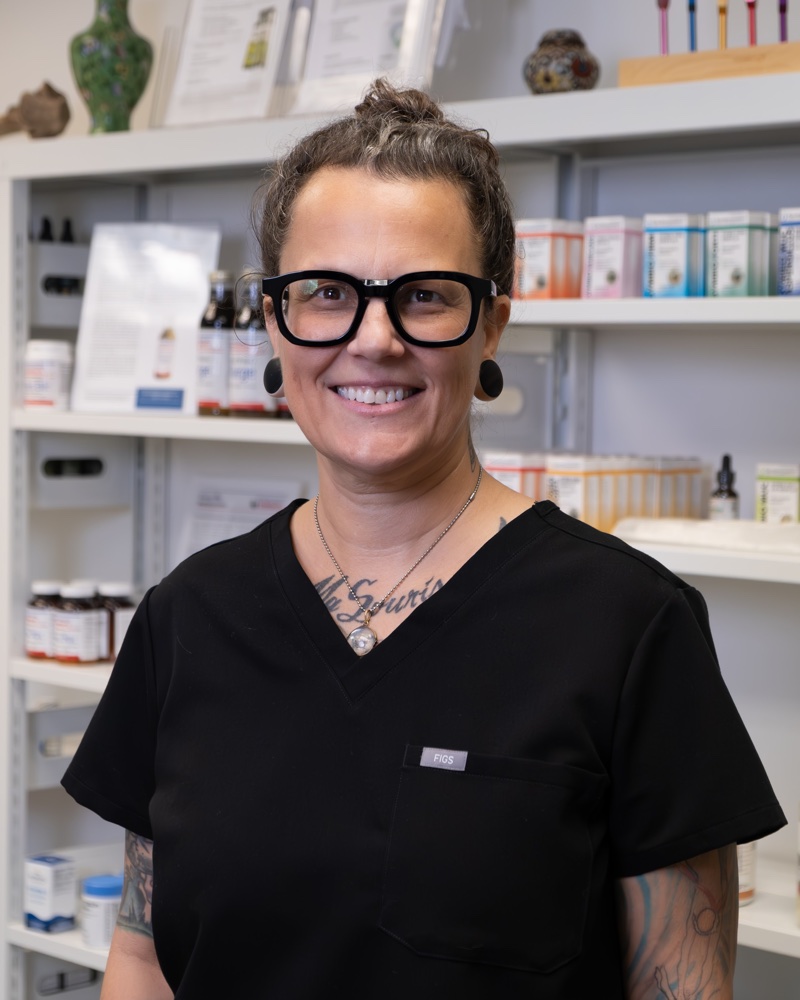
Meet Ash Brown, LMT, FH, CPMT®
Ash is an Upledger-trained Licensed Massage Therapist (LMT) and Functional Herbalist (FH) with 20 years of experience across conventional and integrative health. Her practice centres on CranioSacral Therapy.
She also teaches it. Ash teaches Pathology, Energetics, Aromatherapy and CranioSacral Therapy at the Central Florida School of Massage Therapy — she trains the therapists other clinics go on to hire.
Her background runs through clinical herbalism — she practises as a Functional Herbalist alongside her hands-on work — and somatic therapy, with a foundation in functional medicine and functional neurology. She is a Certified Pediatric Massage Therapist (CPMT®), with advanced pediatric training for children with additional medical needs and specialized training in working with autistic children and in trauma-informed care.
CPMT® is a registered mark of the Liddle Kidz Foundation.
Her own route into integrative work came through her professional experience and through her own recovery from significant health challenges — which is a large part of why she works the way she does.
Her practice centres on gentle touch, deep somatic listening, and care for the whole person. She approaches each session by attuning to the body’s inner wisdom, letting the individual’s needs and responses guide the pace and direction of the work.
Outside the clinic, Ash is usually sharing food with family and friends, befriending animals, camping, on a river somewhere, or making art.
For Children and Families
CranioSacral Therapy here is for patients aged 9 and up. For ages 2 to 8, Ash offers Touch Therapy instead — the same practitioner and the same gentle, consent-led approach, in a form suited to a younger child. Touch Therapy sessions are 60 minutes. Call us and we will book you into the right appointment.
For children 9 and over, finding someone who can work gently and patiently with a child who finds clinical settings overwhelming is genuinely hard. Ash’s pediatric training includes advanced work with children who have additional medical needs, and specialized training in working with autistic children.
To be clear about what that means: it means she is equipped to provide calm, consent-led, sensory-aware hands-on care, at the child’s pace. It is not a treatment for any diagnosis, and we will not suggest otherwise.
If you have struggled to find anyone your child will tolerate, it is worth a conversation.
Where the Evidence Actually Stands
We would rather tell you what the evidence shows than oversell it.
CranioSacral Therapy is not a treatment for any specific condition, and the research is genuinely mixed. The most recent systematic reviews find effects on pain that are small and not clinically meaningful, and rate the certainty of that evidence as low. An earlier review was more favourable. A 2025 review of headache trials was more positive and suggested any benefit may come from settling the autonomic nervous system rather than from anything structural.
So here is our honest position: what CranioSacral Therapy reliably offers is an hour or more of deeply restful, skilled, hands-on attention that helps calm an overloaded nervous system. For a lot of people that is worth a great deal. If what you need is something targeting a specific diagnosis, we have other tools in the building and we will point you to them instead.
Book With Ash
Ash is in the clinic Mondays and Thursdays, 8am to 6pm, plus one Saturday morning each month, 8am to 1pm. Two days a week fills up, so it is worth booking ahead rather than hoping for a gap.
First visit — 90 minutes. A 30-minute detailed intake plus a full 60-minute session. Every patient starts here. Follow-up — 60 minutes. Packages are available once you have completed your first visit.
For current pricing, call the front desk on (321) 926-2997 — we will talk you through the options.
Insight Chiropractic Health & Wellness Center 1551 Sandspur Road, Suite 101, Maitland, FL 32751
Or call (321) 926-2997. Many patients add CranioSacral Therapy alongside chiropractic care, Acupuncture or hyperbaric oxygen therapy.
This page is for educational purposes and is not medical advice. CranioSacral Therapy is not a cure for any disease, and individual results vary. Talk with your physician before starting any new therapy.