
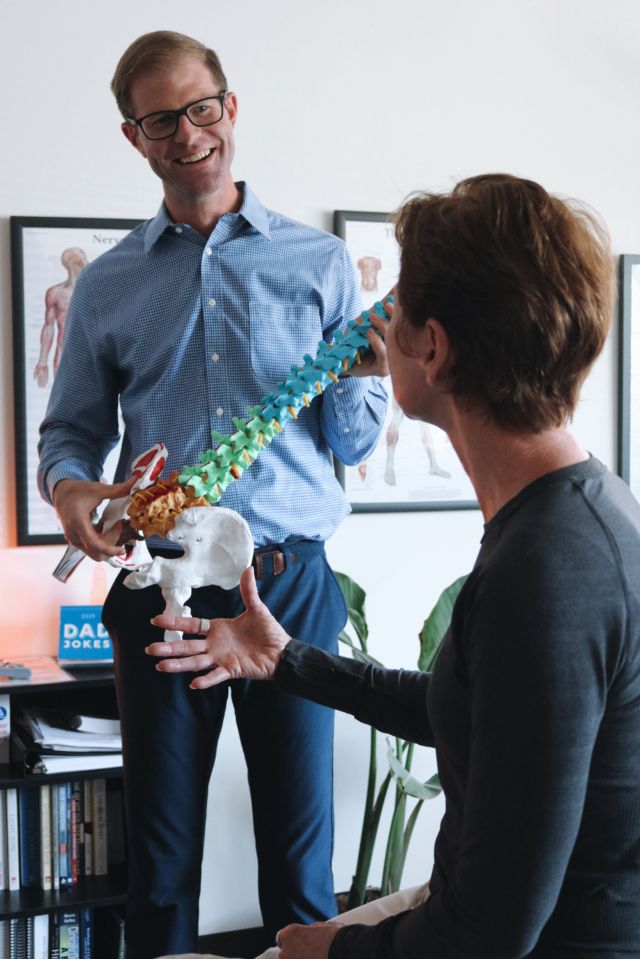
Customized Care
Everyone is unique and requires individualized care to achieve optimal health outcomes. We are dedicated to giving your health the specialized attention it deserves.
Dr. Olenek adjusts using Applied Kinesiology, and that changes what an adjustment is. Muscle testing shows him how your nervous system is responding in the moment, so the adjustment that follows is gentle, specific, and customized to your own neurology — not a routine applied the same way to everybody who walks in.
Specific means less force, not more. When the right thing is found, it does not need to be forced.
For patients who need gentler still, Activator adjusting is available — a small instrument delivering a precise, low-force impulse, with no twisting and no cracking. More on that below.
Types of adjustments
Standard Full Spine Adjusting: Primarily for adults seeking to relieve pain, restore function and/or range of motion, reduce nerve interference, recover from trauma, restore/improve overall health and immune function.
Low Force Adjusting: Gentle, instrument-assisted adjusting for anyone who does not want — or should not have — a manual, hands-on thrust. No twisting of the neck or back, and no popping sound. Chosen by pediatric and geriatric patients, by patients with osteoporosis or other bone conditions, and by plenty of people who are simply uneasy about being adjusted by hand. It takes a little more time, and it is worth it.
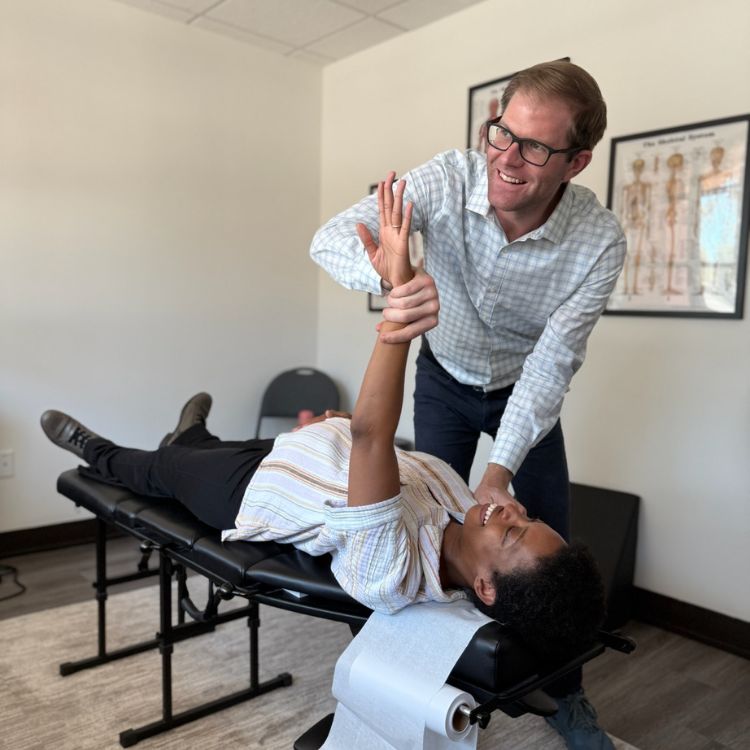
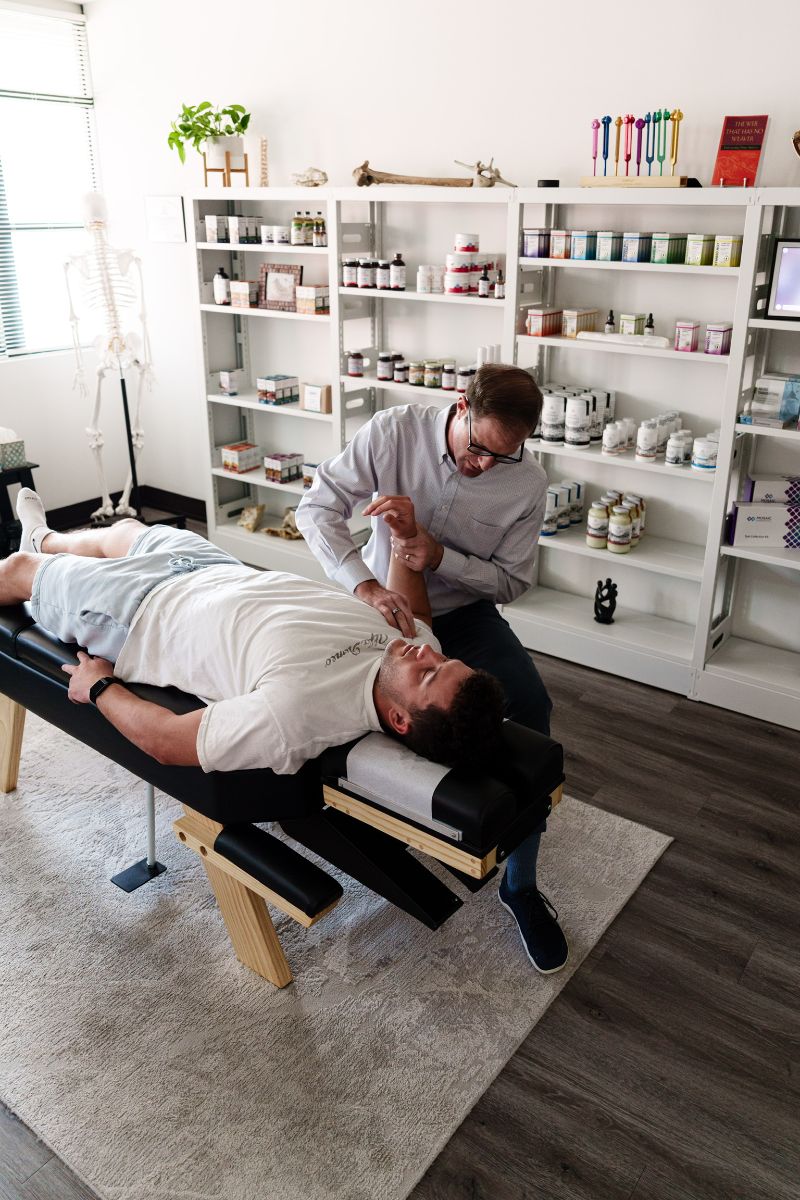
Extremity Adjusting: Not only the spine. Shoulders, elbows, wrists and hands, hips, knees, ankles and feet are all adjusted here. Each one starts with a thorough assessment — isolating every associated muscle and establishing exactly how the joint is sitting — before anything is adjusted. A shoulder that will not settle is often not a shoulder problem, and the assessment is what tells us where to work.
Other Special Care: Webster for pregnant mothers and babies.
If you don’t want to be “cracked”
We hear this every week, and it is a completely reasonable thing to want. A lot of people suspect chiropractic care would help them and still do not want the twisting, the hands-on thrust, or the popping sound that goes with it.
You do not have to have one.
Dr. Olenek is trained in the Activator Method, one of the most widely used low-force techniques in chiropractic. Rather than adjusting you by hand, he uses a small spring-loaded instrument — the Activator — that delivers a single quick, light impulse to one specific spot. It is precise and controlled, there is no twisting, and there is no crack. Most patients describe it as a light tap.
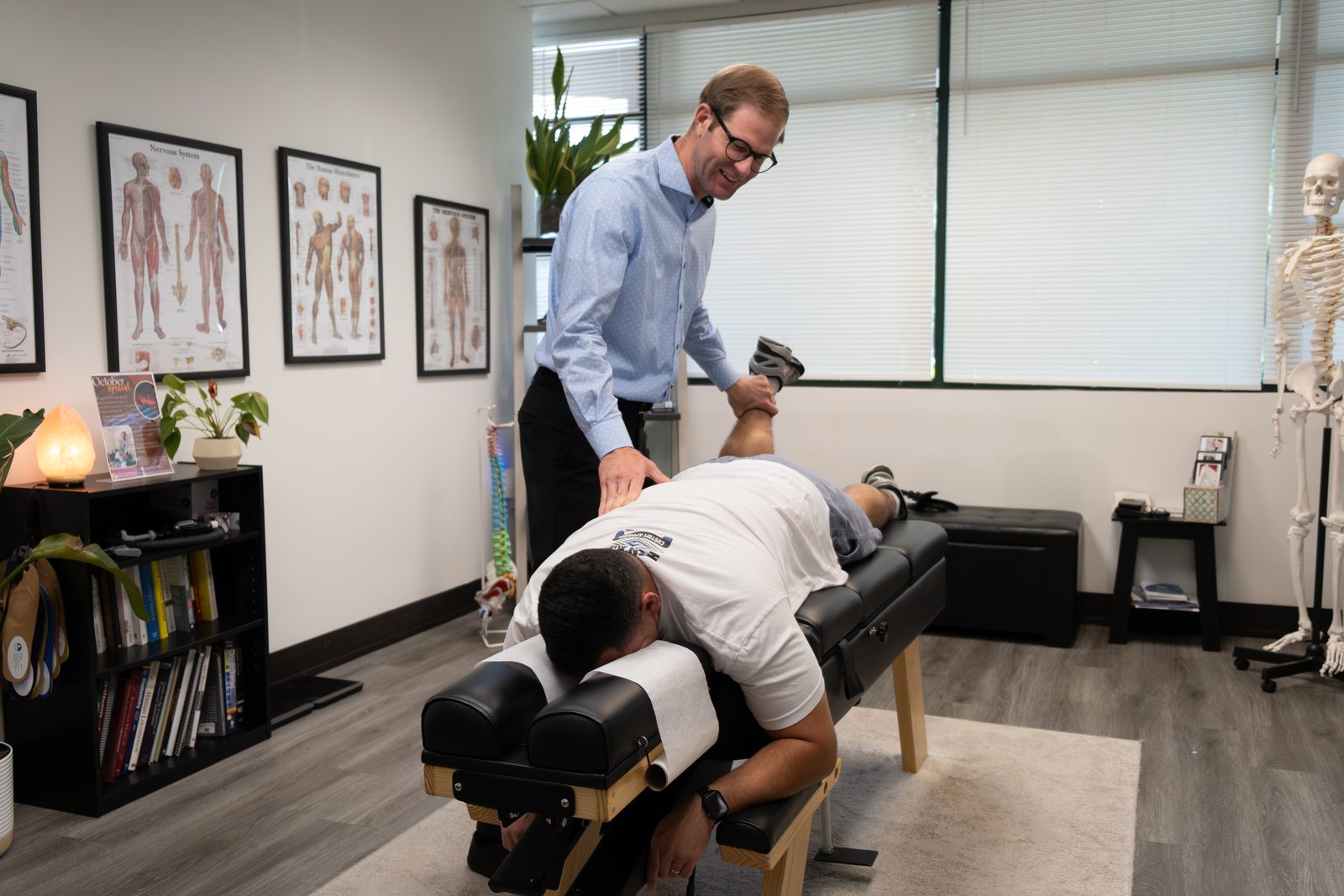
He also uses Thompson, Sacro-Occipital Technique and Webster, so the force and the approach get matched to you rather than the other way round.
Who tends to ask for it:
- People who are nervous about being adjusted, or who have had one experience they did not like
- Patients with osteoporosis, osteopenia, or other bone conditions
- Children and older adults
- Patients recovering from a recent injury or surgery, where a manual thrust is not appropriate
- Anyone who would rather start gently and see how their body responds
What the research does and does not show. Instrument adjusting has been in use for decades, and the Activator is one of the better-characterized tools in chiropractic — a great deal is known about exactly what it delivers. What is not settled is whether it outperforms a manual adjustment. The research does not show that one is better than the other. We offer both because the right choice depends on your body, your history, and what you are actually willing to come back for. An adjustment you avoid helps nobody.
What to expect
- A thorough intake to discuss your present complaints, goals, and past medical history.
- You will receive a customized treatment plan.
- We also offer adjustments during the first appointment.
X-ray On Site
Full spine X-ray is part of the new patient examination for patients 13 and over. It is taken here in the office, so there is no referral out and no second trip to an imaging center. You get a report of the findings and they are reviewed with you alongside the rest of your examination.
Children under 13 are not X-rayed.